What We Do

Services

Every job we quote starts with a look at your soil, your slab and the load it has to carry.

HomeServices

Everything we take on

Every job below is one we do ourselves across La Crosse.

Concrete Driveways

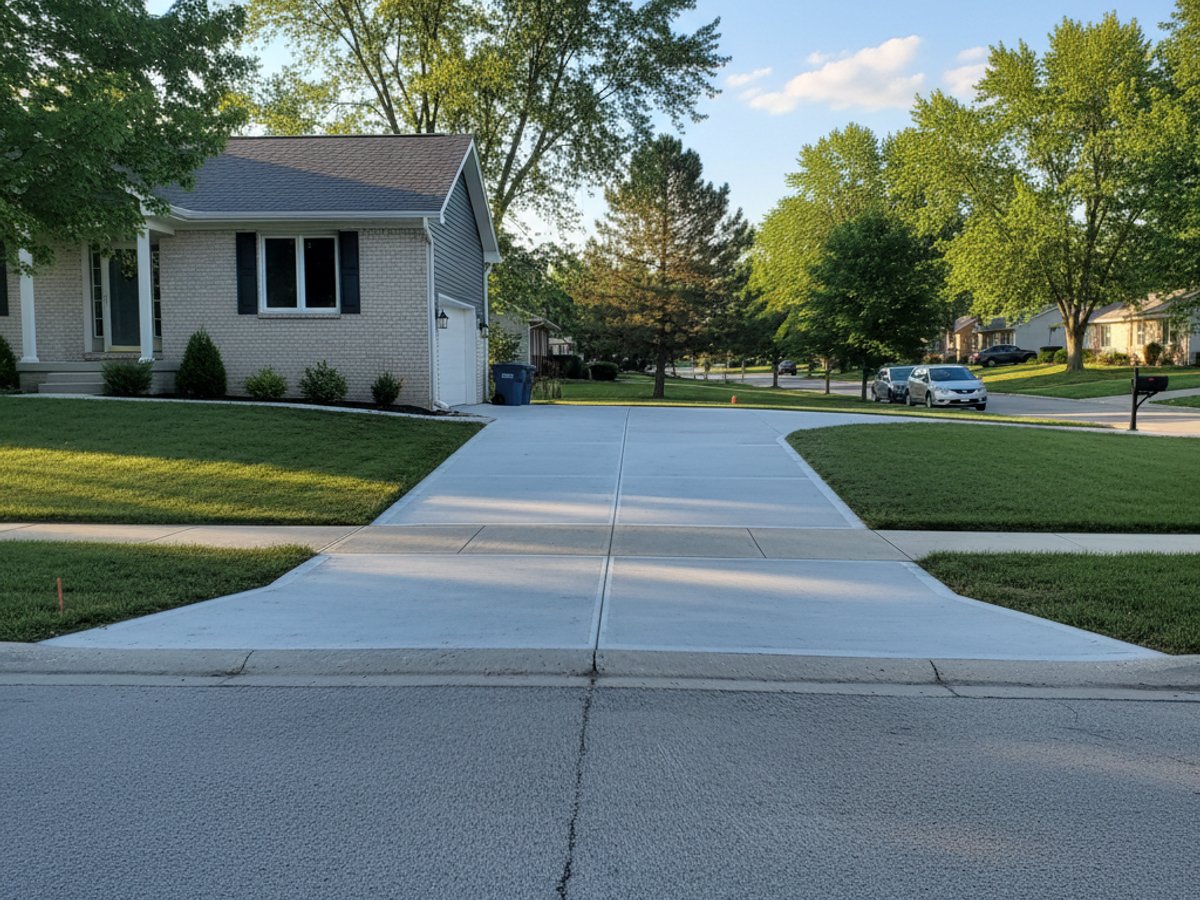
We excavate, grade and compact a gravel base before any concrete goes down, because a driveway is only as good as what's underneath it. We'll talk you through 4-inch versus 6-inch thickness depending on whether you're parking a car or a truck, and rebar versus wire mesh for reinforcement. Plan on keeping vehicles off it for about a week while it cures.

Concrete Patios

A patio slab gets sloped away from the house at about a quarter inch per foot, so water doesn't pool against your foundation. We can broom finish it for a plain look or add a stamped pattern if you want something more decorative. Most patios go from forms to finished pour in a day.

Stamped Concrete

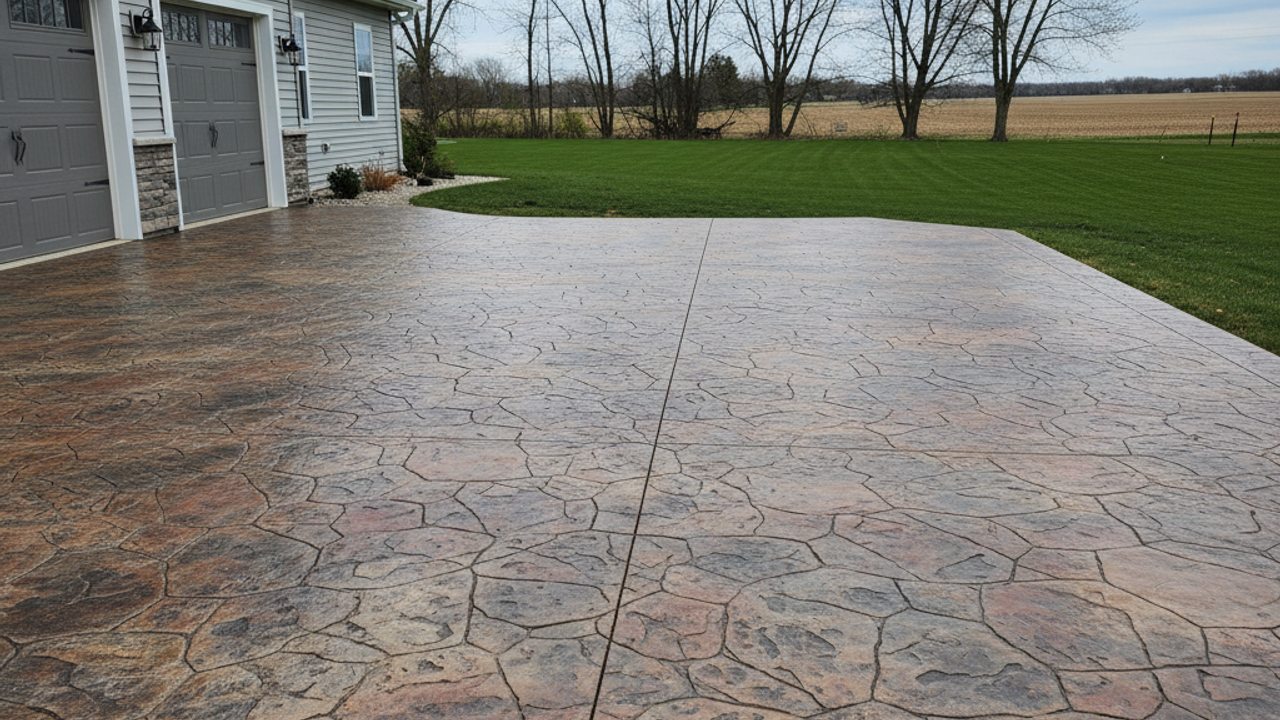
Stamped concrete gets you the look of flagstone, brick or slate at a fraction of the cost, and it doesn't have joints where weeds take hold. Timing matters here, the pattern gets stamped into the slab while it's still plastic, usually within a couple hours of the pour. We seal it after curing to protect the color and texture.

Concrete Sidewalks & Walkways

Sidewalks take the same base prep as a driveway, just narrower forms. We space control joints roughly every four to five feet so the walkway cracks in a straight line instead of a diagonal one across the middle.

Concrete Repair

Not every crack means a full tear-out. If the slab is still level and the crack is hairline, we can often patch or resurface it. If it's heaved, sunk or crumbling at the edges, replacement is usually the more honest answer, and we'll tell you which one you're looking at.

Concrete Foundations

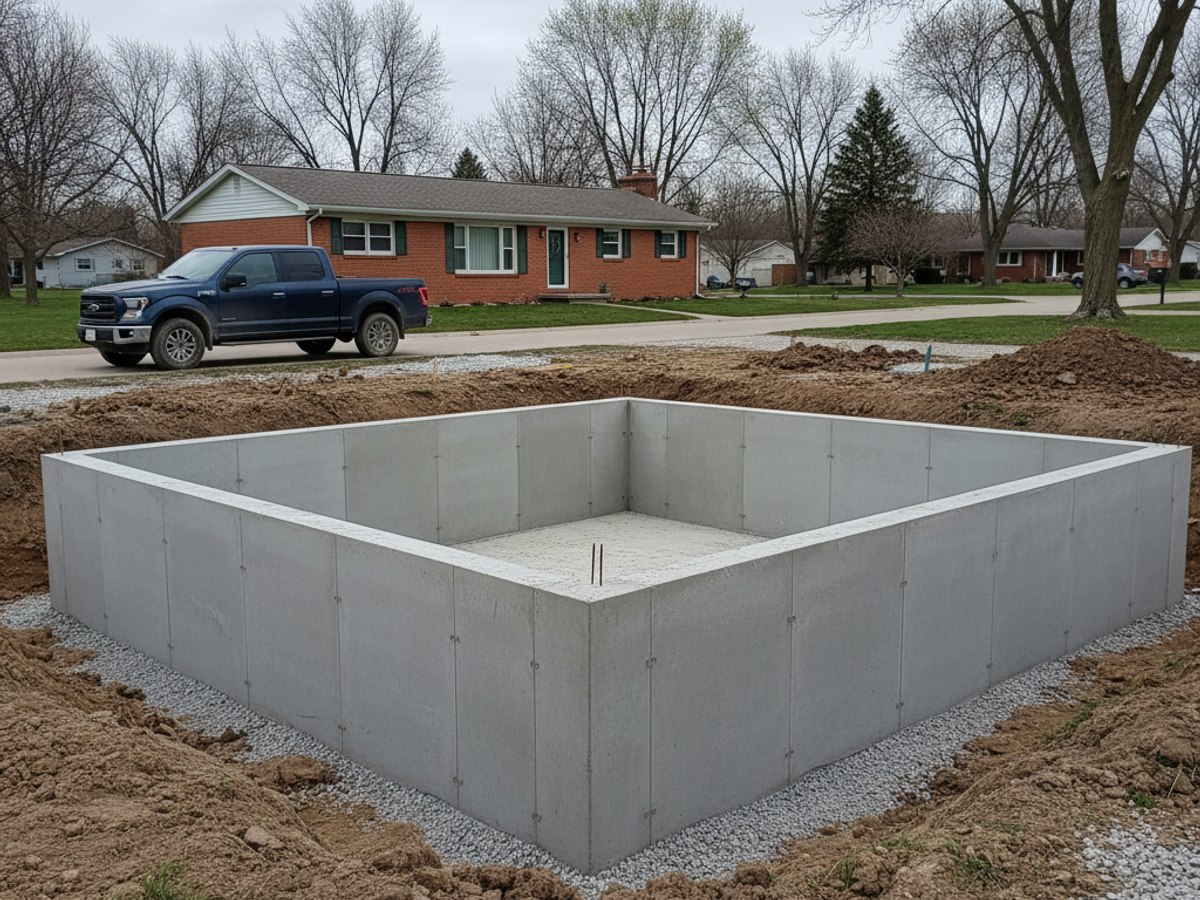
We form and pour foundation walls and footings for additions, garages and outbuildings. Footing depth has to get below the frost line here, which in this part of Wisconsin runs close to 42 inches, so we don't cut that corner.

Garage Slabs & Floors

A garage floor that's going to see a vehicle, a lift or heavy tools requires more than a standard patio mix. We size the thickness and reinforcement for what you're actually going to put on it, and we can add a broom or trowel finish depending on how you'll use the space.

Concrete Steps & Porches

Front steps take a beating from salt, boots and freeze-thaw cycles more than almost any other slab on the property. We build these with air-entrained concrete specifically, because it resists the scaling that a plain mix doesn't.

Retaining Walls

If your yard has a grade change that's washing out soil or pushing against a foundation, a retaining wall holds it back. We build these to handle the drainage behind the wall, not just the weight in front of it, because a wall that traps water behind it is the one that fails.

Decorative & Exposed Aggregate Concrete

Exposed aggregate gives you a textured, non-slip surface that hides minor surface imperfections better than a plain broom finish. We wash back the top layer of cream while the slab is still curing to expose the stone underneath.

How It Works

Four steps, and no surprises in any of them.

01

We come and look

You tell us what you want doing, we look at what is actually there, and we ask the awkward questions early.

02

You get a price

In writing, itemised, free. If something might add cost later we flag it now rather than at the end.

03

We do the work

Same crew throughout. We cover your floors, keep the dust down and tidy up before we leave each day.

04

We walk it with you

You point out anything you are not happy with and we fix it before the invoice, not after.

Where We Work

All of this, across La Crosse, WI

This is the general range we cover for concrete work out of La Crosse.

La Crosse, WI
Winona, WI
Onalaska, WI
Holmen, WI
Sparta, WI
Tomah, WI
West Salem, WI
Viroqua, WI
Westby, WI
Galesville, WI
Bangor, WI
Common Questions

Things worth asking

Questions that usually come up once a concrete project is actually underway.

Do I need a permit for a new driveway or patio?
Permit requirements for concrete work vary by municipality, but replacing an existing driveway in the same footprint often doesn't require one, while a new patio or an expanded driveway sometimes does. A contractor should confirm this with the local building department before pouring.
How long does a typical concrete job take?
A standard driveway or patio pour usually takes one to two days for forming and pouring, with another five to seven days before it can handle vehicle traffic. Larger jobs with excavation or drainage work can take a week or more from start to finish.
Can you work within a specific budget?
Concrete contractors can usually adjust scope to fit a budget, for example by using wire mesh instead of rebar on a smaller slab or skipping a decorative finish. It's worth discussing budget upfront so the quote reflects what's actually required versus what's optional.
Do you guarantee your work?
Most concrete contractors guarantee against workmanship defects like improper joint spacing or a slab that settles due to poor base prep, typically for one to two years. Cracking from normal shrinkage at control joints is expected and not usually covered, since it's part of how concrete cures.
Who will I be dealing with once the job starts?
On most concrete jobs, the crew lead who quoted or measured the project stays in contact throughout the pour and finish, rather than handing communication off to an office.
What kind of concrete mix do you use?
Air-entrained concrete mix is standard for anything exposed to freeze-thaw cycles and winter salt, which covers most driveways, steps and walkways in Wisconsin. Interior slabs like garage floors sometimes use a different mix depending on load requirements.
Can I still use my driveway or yard during the work?
Access to a driveway or patio area is limited during forming, pouring and the initial cure, generally a week for vehicle traffic and a day or two for foot traffic. Alternate parking or access should be planned for during that window.
Do I need to do anything to prepare the site before you arrive?
Clearing the work area of vehicles, furniture, plants and sprinkler lines ahead of time speeds up the job, though excavation and grading are handled by the concrete crew. Marking any buried utility lines or septic components in the area is also worth doing beforehand.
What happens if you find a problem once the old concrete is removed?
Issues like poor soil conditions, a broken drain pipe, or an undersized old base sometimes show up only after demolition, and a contractor should flag this before pouring rather than covering it up. This can add cost or a short delay, but addressing it prevents the new slab from failing the same way the old one did.
How should I take care of new concrete after it's poured?
New concrete needs to cure for about a week before regular vehicle traffic and closer to a month before it reaches full strength. Sealing the surface and avoiding de-icing salt during the first winter both help prevent surface scaling.

Not sure what you need?

Describe the problem and we will tell you what it probably is. No obligation.

Call (608) 909-8146